If you’re planning to tow a caravan, work trailer, horse float or loaded box trailer, heavy duty towbar installation is not a job to treat as an afterthought. The towbar has to match the vehicle, suit the load, and be fitted properly so the whole setup performs the way it should on the road. A bar that looks the part but is poorly matched or badly installed can create problems fast – from electrical faults through to unsafe towing behaviour.
For most owners, the real question is not just whether a heavy-duty towbar can be fitted. It is whether the right system is being installed for the way the vehicle will actually be used. That means looking beyond the bar itself and paying close attention to mounting points, rated capacity, tow ball download, wiring, trailer plug configuration and any supporting electrical gear that may be needed.
What heavy duty towbar installation actually involves
A proper heavy duty towbar installation starts with vehicle compatibility. Not every vehicle takes the same style of bar, and not every towbar advertised as heavy duty will be appropriate for the make, model and year of your vehicle. Some need a direct chassis-mounted solution. Others rely on manufacturer-specific mounting points and carefully engineered brackets that spread load correctly.
That matters because towing loads do not just pull backwards. They place stress through the rear structure of the vehicle, especially under braking, over rough surfaces and when the trailer shifts weight. A good installation is designed around those forces, not just around getting a bar bolted on.
It also involves the electrical side, which is where plenty of shortcuts show up. Modern vehicles often need trailer wiring integrated neatly and correctly so lights, indicators and brake signals work without causing faults in the vehicle’s electrical system. On some vehicles, especially newer models, that can mean a dedicated wiring solution rather than a basic splice-in approach.
Choosing the right towbar for the job
This is where experience counts. A family SUV towing a camper trailer has different needs from a ute hauling tools during the week and a machinery trailer on weekends. Both may need a heavy-duty setup, but the towbar class, tongue style, ball mount height and electrical accessories can be completely different.
The most common mistake is choosing purely by maximum advertised towing figure. That number matters, but it is only part of the picture. You also need to consider the vehicle’s rated towing capacity, its maximum tow ball mass, the trailer’s loaded weight and how often the vehicle will be towing near its upper limit. If you’re regularly working close to capacity, the install needs to be selected with that reality in mind.
Ground clearance and rear access can also affect the choice. Some owners want a towbar that sits neatly and preserves the look of the vehicle as much as possible. Others care more about practical durability and easy coupling. There is no single right answer – it depends on the vehicle and what it tows.
Heavy duty does not mean one-size-fits-all
A heavy-duty towbar should never be treated as a universal accessory. The right setup for a dual-cab ute may not suit a wagon, even if both vehicles have similar tow ratings on paper. Bar design, receiver style, mounting system and clearance all vary.
That is why product selection matters just as much as workmanship. Recognised brands with properly engineered vehicle-specific designs tend to fit better, carry clearer ratings and deliver more predictable long-term performance. Cheap generic options can look similar in photos, but the differences show up quickly in fit, finish and reliability.
Why installation quality matters more than most people realise
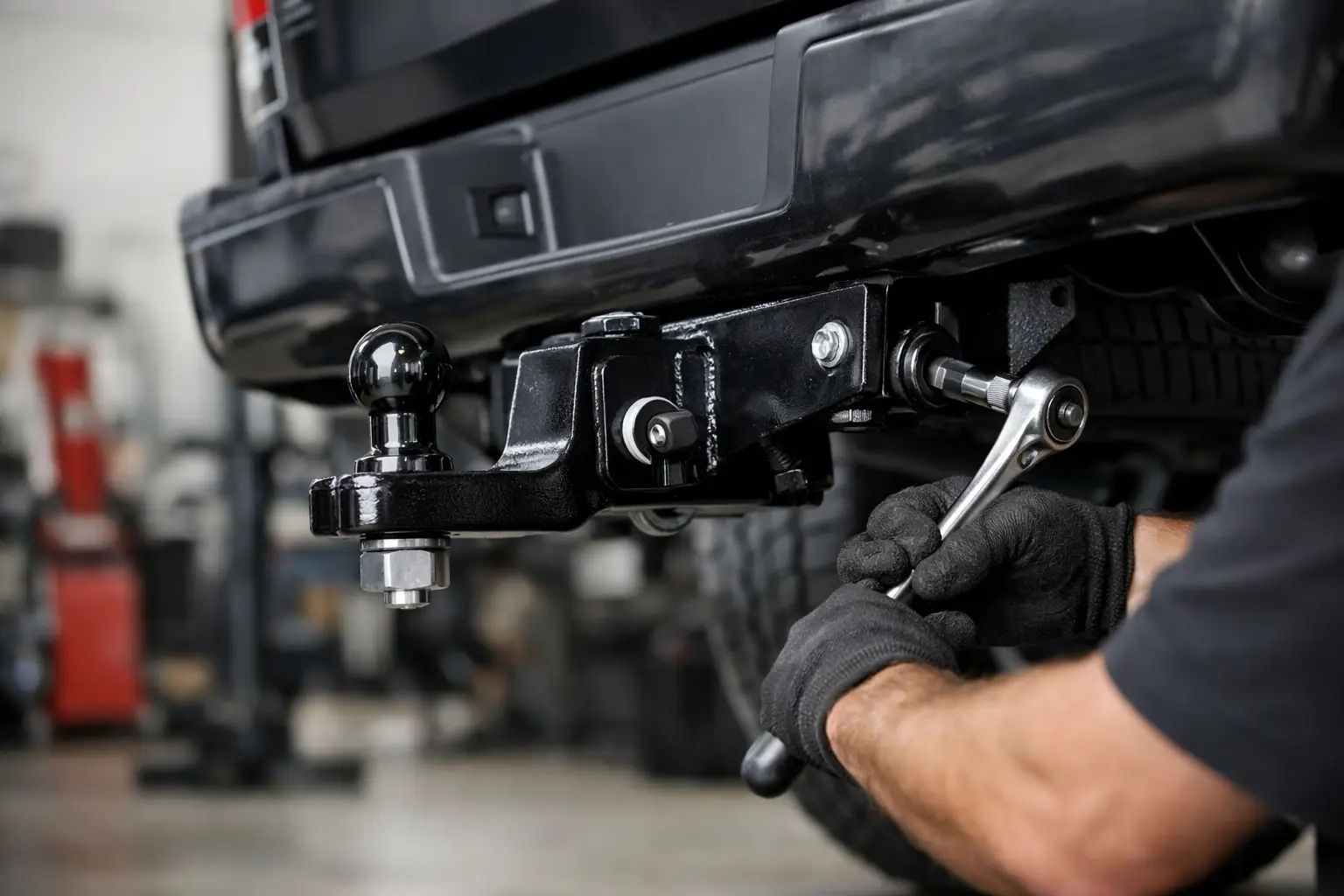
A towbar is a safety component. Once a trailer is attached, you are relying on that system every time you accelerate, brake, corner or hit a pothole. Good heavy duty towbar installation means the bar is mounted to specification, all fasteners are torqued correctly, clearances are checked, and the electrical connection is tested properly before the vehicle goes back into use.
It also means the installer pays attention to the details that affect day-to-day ownership. That includes neat cable routing, secure plug mounting, sensible tow ball height and making sure nothing fouls on bumper trims, spare wheels or rear-mounted accessories. A rushed fit-out might still tow, but it often shows its weaknesses later through rattles, wiring issues or awkward trailer hookup.
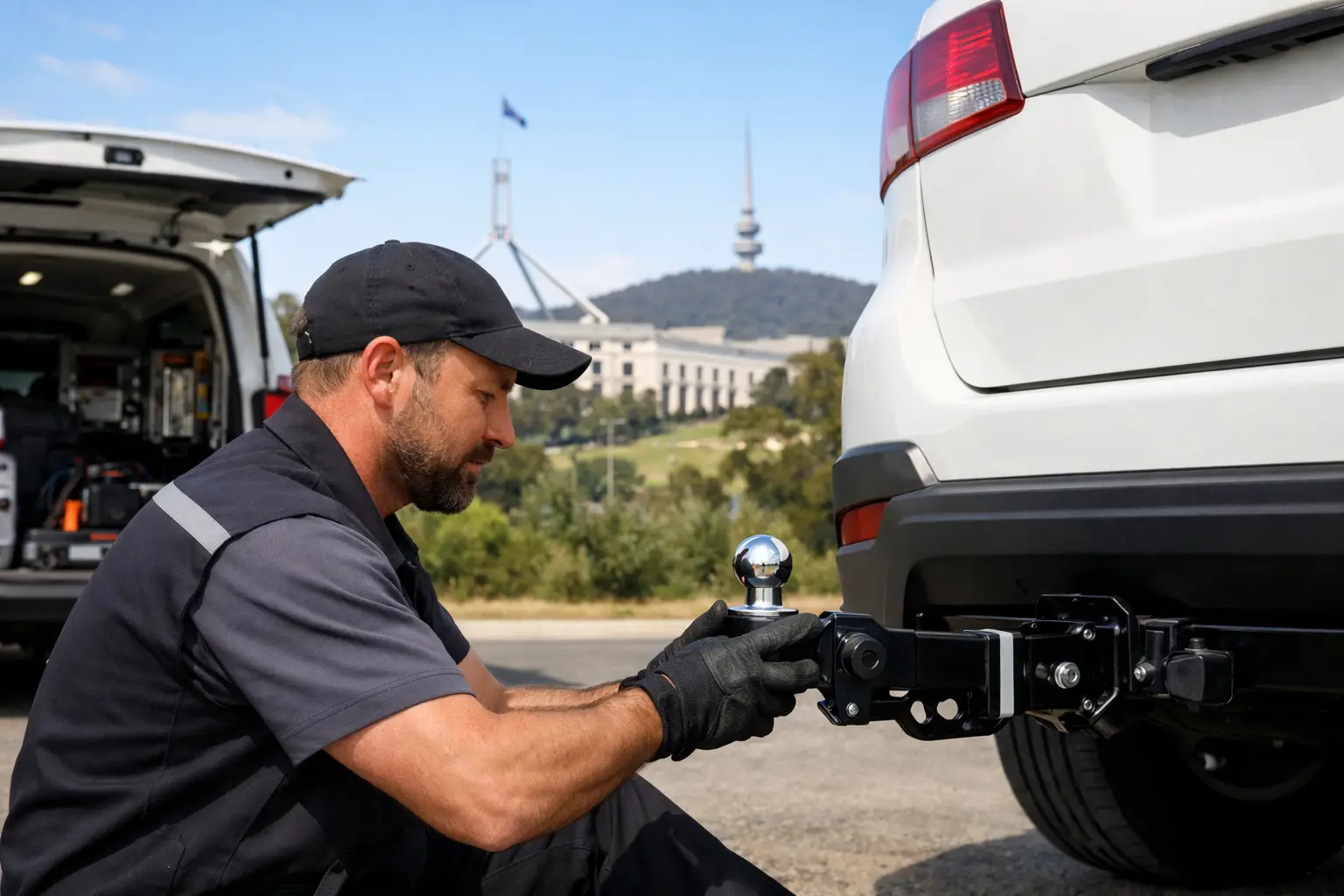
For many Canberra drivers, convenience matters as well. Taking time out to sit around a workshop is not always practical, especially if the vehicle is used for work or family commitments. That is why mobile fitting has become a smart option. When it is done by specialists with the right gear, you get the same professional result without losing half a day getting to and from a workshop.
Wiring and trailer electrics are part of the installation, not an add-on
A towbar without the right electrical setup is only half the job. Trailer lights must operate correctly, and depending on what you’re towing, you may also need brake controller wiring, an Anderson plug or trailer rewiring.
This is especially relevant for caravans, enclosed trailers and setups with electric brakes. In those cases, heavy duty towbar installation often needs to be considered as part of a broader towing package. Fitting the bar alone is not enough if the vehicle also needs power supply upgrades or brake control equipment to tow legally and safely.
There is also a difference between a basic occasional-use trailer setup and one designed for regular long-distance towing. If you tow a garden trailer once a month, your needs are fairly simple. If you tow a van interstate or haul gear for work every week, reliability becomes far more important. That is where clean electrical work and quality components make a real difference.
When extra towing hardware is worth it
Not every vehicle needs every accessory, but some additions make sense depending on the load. Brake controllers are often essential for trailers with electric brakes. Anderson plugs are common for caravans that need auxiliary power. Upgraded trailer plugs or rewiring may be required if the existing trailer setup is tired, damaged or mismatched.
The point is simple – the towbar should be installed as part of a complete towing solution, not treated in isolation.
What to expect from a professional heavy duty towbar installation
The process should be straightforward. First, the vehicle and towing requirements are assessed properly. That means identifying the exact vehicle details, confirming intended trailer use and selecting a towbar and wiring package that suit both. Clear advice at this stage saves a lot of trouble later.
Next comes the installation itself. A professional fit-out is careful, clean and methodical. Panels and trims are handled properly, mounting hardware is installed to specification, and electrical connections are tested before sign-off. If additional components such as brake controllers or Anderson plugs are being fitted, they should be mounted neatly and positioned for practical everyday use.
Just as important is transparency. You should know what brand is being fitted, what the rated capacity is, what plug type is included and whether any extra equipment is recommended for your towing needs. Straight answers matter.
For local owners who want that done without workshop downtime, a mobile specialist is often the most practical option. Towbar Discounts has built its reputation around exactly that – supplying and fitting towing and auto electrical equipment onsite, with the kind of workmanship people expect when the job needs to be right the first time.
Getting the balance right between cost and value
Price always matters, but the cheapest install is rarely the best value if it creates problems later. Rework, electrical faults, poor fitment and towing issues cost more in the long run than getting the right bar fitted properly from the start.
Good value usually comes from three things working together: a towbar that suits the vehicle, an installation carried out by people who do this work every day, and support if you need extra towing equipment now or later. That is a far better result than chasing the lowest number on a quote and hoping for the best.
If you’re investing in towing capability, think about how you’ll use it over the next few years, not just next weekend. A properly selected and professionally fitted heavy-duty towbar gives you confidence every time you hook up, whether it’s for work, holidays or the jobs that keep piling up around home.
The best setup is the one that suits your vehicle, your load and your routine – and when that’s installed properly, towing becomes a lot simpler.